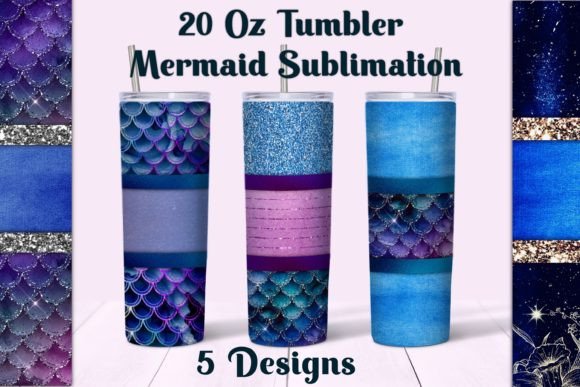
5 Mermaid Tumbler Sublimation Designs
First Impressions: Whimsy That Translates Well—With Caveats
As a designer who’s stitched mermaid motifs on everything from baby onesies to boutique aprons, I opened 5 Mermaid Tumbler Sublimation Designs expecting charm—and got it. But not the kind that glitters and fades under thread. These five PNGs (300 DPI, STRAIGHT and TAPER versions both 9.3" x 8.2") land with gentle confidence: soft curves, flowing hair, subtle scale details, and balanced negative space. They’re clearly built for tumblers—but their clean silhouettes and moderate detail level mean they *can* cross over into embroidery—if you approach them intentionally.
A Real-World Test: Turning One Into a Handmade Tote Bag
Last week, I prepped a custom embroidered tote for a local kids’ boutique—theme: “ocean magic,” target age 3–7. I chose one of the taper designs (to wrap gently over the tote’s curved side seam) and converted it to an embroidery file using my digitizing software. What stood out immediately was how well the taper version handled curvature—not too stretched, not too pinched. The straight version? Better suited for flat surfaces like pillow covers or tea towels. On the tote, the mermaid’s tail flared just enough to read clearly at 7" wide, and her face stayed legible without needing micro-stitching. Customers noticed it right away—not as “cute,” but as “thoughtfully made.” That matters when you’re pricing handmade products at $42 a piece.
Where It Shines in Embroidery Projects
- Custom apparel: Works beautifully on sweatshirts and structured tote bags—especially with a light stabilizer and matte thread. The moderate fill areas avoid puckering on midweight cotton blends.
- Baby embroidery: Choose the simpler mermaid (less hair detail, open silhouette) for onesies or burp cloths. Avoid dense satin stitch zones near necklines—this design doesn’t overload small areas, so it breathes well on delicate fabrics.
- Embroidered patches: The STRAIGHT layout aligns cleanly inside standard 4" hoops—ideal for iron-on or sew-on patches. Just confirm your digitizer preserves the 300 DPI clarity when scaling down.
- Holiday & gift embroidery: Paired with iridescent thread on navy tea towels or linen pillow covers, these feel luxe but not fussy—perfect for Etsy holiday listings where “handmade” and “on-trend” need to coexist.
- Commercial embroidery: Small shops appreciate that all five variations share consistent line weight and spacing. That means faster setup time across orders—and fewer client revisions asking, “Can we make the tail bigger?”
Where to Proceed With Care
This isn’t a plug-and-stitch file—it’s a foundation. You’ll need to adapt it thoughtfully for certain uses:
- Small hoop sizes (under 4"): Not ideal. Even scaled, fine hair strands and tiny shell accents risk becoming muddy. Reserve for 5" hoops minimum.
- Textured or stretchy fabric: Skip the densest fill areas on terry cloth or jersey unless you double-stabilize. The taper version’s smoother contours handle stretch better than the straight cut’s sharper edges.
- Dark fabric backgrounds: Test thread contrast early. Light aqua or pearl white thread pops on navy, but avoid pale yellow—it disappears. Always run a black-and-white mockup first.
- Curved surfaces like caps: The taper layout is your friend here—but only if your cap frame allows full 8.2" height. Many standard frames compress vertical space; measure before digitizing.
- Frequent-wash items (baby blankets, kitchen towels): Reinforce high-movement zones (e.g., tail tips) with a light running stitch outline. The original PNG has no stitch logic—so this is where your embroidery judgment kicks in.
What It Adds to Your Craft Business—Beyond Aesthetics
Using 5 Mermaid Tumbler Sublimation Designs thoughtfully lifts perceived value. On Etsy, customers scroll past generic mermaids in seconds—but a well-executed, stabilized version on a linen market bag signals care. It builds trust: buyers assume you understand fabric behavior, thread choice, and wear patterns. For boutique branding, consistency across five variations lets you launch a mini-collection (“Mermaid Monday” tea towels, matching patches, embroidered totes)—without commissioning custom art each time. And yes, it works for digital product sellers too: use the PNGs in printable mockups to show clients how embroidery would look *before* digitizing—just clarify that these are sublimation files, not embroidery-ready files.
Practical Designer Notes Before You Stitch
- Test on scrap fabric *first*—especially with your go-to stabilizer combo. These designs don’t include stitch data, so density is fully in your hands.
- Check thread color contrast on both light and dark backgrounds. Some mermaid tones fade against heather gray or charcoal.
- Confirm your hoop size accommodates the full 9.3" width. Don’t force-fit—reposition or resize intelligently.
- Inspect small details (e.g., starfish accents, fin outlines) at 200% zoom. If they vanish when scaled below 6", simplify them manually.
- Run black-and-white mockups. If shapes lose identity without color cues, add subtle outline stitches during digitizing.
- Use tear-away + cutaway hybrid stabilizer for structured items (totes, aprons); lightweight cutaway only for baby items.
- Verify licensing terms before selling finished embroidered goods—or reselling digitized versions. This listing states PNG-only, no SVG, so commercial use hinges on your own digitizing work and rights clearance.
Final Thought: A Solid Starting Point—Not a Finish Line
5 Mermaid Tumbler Sublimation Designs won’t replace custom digitizing—but it *does* give crafters, Etsy sellers, and small shop owners a cohesive, mood-aligned visual anchor. In the Crafts category, that’s rare. As Graphics, they’re versatile—but only if you treat them as raw material, not final output. Use them to inspire, adapt, and elevate—not to shortcut. Because in embroidery, the magic isn’t in the mermaid’s tail. It’s in how thoughtfully you let it move through thread, fabric, and intention.