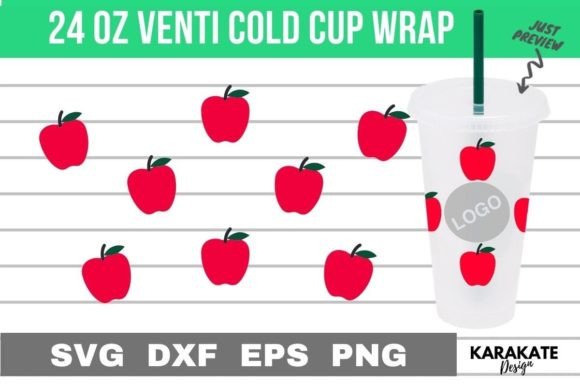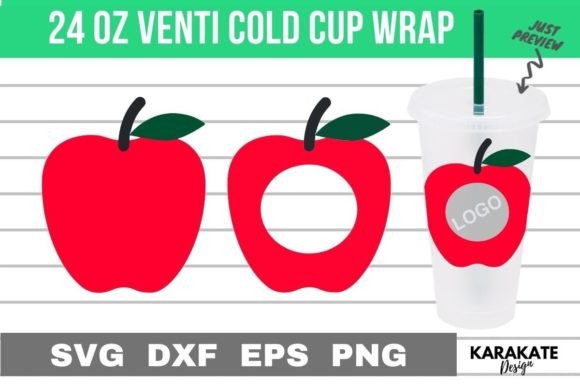
Apple, 24 Oz Venti Cup Wrap
A Designer’s First Glance: Friendly, Familiar, and Built for Real Life
When I opened Apple, 24 Oz Venti Cup Wrap, my first thought wasn’t “cute” — it was “usable.” That’s rare. This isn’t a fussy, overly detailed illustration meant only for digital display. It’s clean, balanced, and clearly designed with physical making in mind — especially embroidery. The apple shape reads instantly, the stem has just enough character without being fragile, and the wrap contour suggests function, not just decoration. It feels like something you’d stitch onto a kitchen towel for a barista friend or embroider on a cotton tote for a local coffee shop pop-up. As a designer who’s turned hundreds of graphics into stitched reality, I appreciate how this design avoids visual noise — no tiny veins, no excessive shading, no micro-details that vanish under thread.
Where It Shines: From Sweatshirt to Small Shop Shelf
I tested Apple, 24 Oz Venti Cup Wrap as part of a real project: custom embroidered sweatshirts for a small-batch boutique launching a “Local Brew” collection. We paired it with a simple serif monogram and stitched it on the left chest of midweight French terry. It held up beautifully — the curves flowed, the satin-stitch edges stayed crisp, and the overall scale felt intentional, not oversized or timid. It works equally well on baby onesies (scaled down), tea towels (centered with running-stitch border), and embroidered patches for aprons. For Etsy sellers, this is a quiet winner: it’s distinctive enough to stand out in a search for “coffee embroidery,” but neutral enough to avoid trend fatigue. As a machine embroidery design, its layout allows for easy alignment in a standard hoop — no awkward repositioning or nesting gymnastics.
What You’ll Notice When You Stitch It
- Stitch density feels thoughtful — not so light it floats, not so heavy it buckles lightweight fabrics.
- The stem and leaf use subtle fill stitch variation, giving dimension without trapping lint or snagging during wear.
- No fine interior lines — meaning fewer jump stitches and cleaner transitions between elements.
- It scales well: at 3.5" wide, it reads clearly on a cap visor; at 2" it still holds identity on a baby bib.
Use With Care: Know Your Fabric & Context
This isn’t a one-size-fits-all embroidery file. On thin or highly textured fabric — think slubbed linen tea towels or stretchy jersey baby onesies — I recommend testing with medium-weight tear-away stabilizer first. The wrap’s gentle curve can distort slightly if tension isn’t balanced. On dark fabric, avoid light thread unless you’re aiming for subtlety — contrast matters for recognition, especially on merchandise like tote bags or aprons where branding needs to land fast. And while the design handles curved surfaces better than most, avoid placing it near the seam ridge of a baseball cap crown unless you’ve confirmed your machine’s hooping method supports it. Also, don’t assume it’s ready for dense applique — the current files suggest a standalone embroidery design, not an applique design with raw-edge layers.
Why It Builds Trust — Not Just Decoration
Customers don’t buy “an apple.” They buy intention. When someone sees Apple, 24 Oz Venti Cup Wrap stitched cleanly on a handmade product, it signals care — in sourcing, in execution, in understanding what makes a gift feel personal. I’ve watched buyers pause longer over items using this kind of focused, purpose-built design versus generic clipart. It elevates a simple sweatshirt into a cohesive story. For craft business owners, that translates directly to perceived value and repeat engagement. It also plays well across platforms: the included PNG (300 DPI, transparent background) lets you build strong printable mockups for Etsy listings, while SVG and EPS files support vector-based branding updates — helpful if you later expand into stickers or packaging.
Practical Notes Every Embroidery Designer Should Check
- Always test Apple, 24 Oz Venti Cup Wrap on scrap fabric matching your final project’s weight and stretch.
- Review stitch density in your embroidery software — adjust if needed for delicate fabrics like baby knits.
- Confirm hoop size compatibility before digitizing — some versions may require a 4x4 hoop minimum.
- Inspect small details like the stem tip in black-and-white preview mode — what looks fine on screen may blur when stitched.
- Compare thread color options against both light and dark fabric backgrounds before finalizing.
- Use appropriate stabilizer: cut-away for knits, tear-away for stable wovens, fusible for lightweight linens.
- Verify licensing terms — especially if you plan to sell finished products or resell the digital embroidery file as part of a craft bundle.
Final Thought: A Design That Serves the Maker
Apple, 24 Oz Venti Cup Wrap doesn’t shout. It fits. That’s its strength. In a landscape crowded with overly complex graphics and pixelated shortcuts, this feels like a tool made by someone who’s actually stitched on a sweatshirt at 2 a.m. before a craft fair. It belongs in your folder of reliable design assets — not as filler, but as a go-to for custom apparel, personalized gifts, holiday embroidery, and small shop merchandise that needs to look professional without demanding perfection from your machine or your time. Whether you're an Etsy seller building a cohesive brand, a hobbyist stitching for joy, or a commercial embroiderer quoting client work, this is one of those rare Crafts category graphics that earns its place in real-world making.