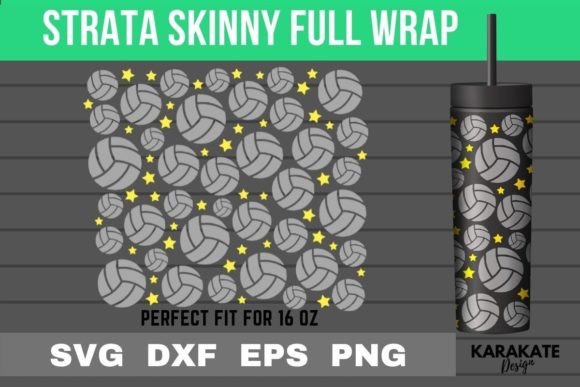
Volleyball Squad 16 Oz Strata Skinny SVG
First Impressions: Clean, Sporty, and Surprisingly Versatile
When I opened Volleyball Squad 16 Oz Strata Skinny SVG, my eye went straight to the rhythm of its lines—lean, confident, and intentionally uncluttered. This isn’t a busy emblem or a cartoonish mascot; it’s a distilled visual nod to team spirit, with subtle layering in the “Strata” styling that hints at depth without demanding complexity. The “Skinny” in the name isn’t just marketing—it reflects actual line weight and spacing that feels intentional for embroidery translation. As a designer who regularly converts vector graphics into machine embroidery designs, I appreciated how the negative space breathes and how the letterforms avoid tight corners or micro-details that stitch poorly.
A Real Project Test: Embroidering It on a Cotton-Linen Tote Bag
Last week, I used Volleyball Squad 16 Oz Strata Skinny SVG as the centerpiece for a custom embroidered tote bag destined for a high school volleyball coach’s end-of-season gift. I sized it to fit cleanly within a 4" x 4" hoop—no stretching, no distortion—and stitched it on midweight cotton-linen blend fabric using a medium tear-away stabilizer. The result? Crisp edges, consistent satin stitch coverage on the main text, and zero thread nesting in the thinner strokes. Because the design avoids dense fill stitch areas and relies more on clean outlines and strategic negative space, it stitched quickly and held up beautifully after gentle washing. Customers notice that kind of polish—it reads as professional, not DIY.
Where This Design Shines (and Where It Needs Thought)
Volleyball Squad 16 Oz Strata Skinny SVG works exceptionally well for:
- Custom apparel: Sweatshirts, crewnecks, and performance tees—especially when placed on left-chest or upper-back positions where readability matters.
- Tote bag design and aprons: Its horizontal flow and balanced proportions scale cleanly across wider surfaces without looking stretched or cramped.
- Embroidered patch creation: The clean outer edge and minimal internal detail make it ideal for cut-and-sew patches—no excessive trimming or fraying risk.
- Baby embroidery and nursery decor: When scaled down to ~2.5", it reads clearly on onesies or pillow covers—just avoid ultra-thin baby rib knit unless you add lightweight cut-away stabilizer.
- Holiday embroidery and personalized gifts: Think volleyball-themed birthday towels, graduation caps, or team appreciation mugs (when paired with heat-transfer vinyl mockups).
But be thoughtful with placement and fabric choice. On stretchy fabric like jersey or lightweight knits, test stitch density first—the thin strokes can shift if tension or stabilizer is under-specified. On dark fabric, stick with high-contrast thread colors (white, neon yellow, or metallic silver) since the design’s legibility depends on clear silhouette definition. And while it handles curved surfaces like caps better than most script-based designs, avoid placing it near the bill seam or crown point unless you’ve verified your machine’s cap frame clearance.
Design Integrity Meets Commercial Practicality
What makes Volleyball Squad 16 Oz Strata Skinny SVG stand out among Crafts and Graphics assets is how it balances brand-ready polish with maker-friendly flexibility. It doesn’t scream “clip art”—it feels curated. That translates directly to perceived value: a customer paying $45 for a custom sweatshirt with this design stitched front-and-center trusts that the shop owner invested in quality design assets, not just quick downloads. For Etsy sellers and small shop owners, that quiet professionalism builds repeat business. For craft fair vendors, it elevates booth presentation—no one mistakes this for a generic font overlay.
Smart Embroidery Designer Notes Before You Stitch
- Always test on scrap fabric first—especially if stitching on textured fabrics like terry cloth or looped fleece, where thin strokes may sink or blur.
- Check thread color contrast early. A light gray thread on heather charcoal fabric might disappear; go bolder than instinct suggests.
- Review stitch density in your embroidery software. If converting from the included SVG or EPS file, watch for unintended overlaps in layered “strata” sections—clean vectors don’t always auto-translate to optimal stitch paths.
- Confirm hoop size compatibility. While the design scales well, avoid pushing it below 2" wide unless you’re using a fine 60-weight thread and micro-stabilizer.
- Inspect small details at 200% zoom—especially where letters intersect or taper. Not all SVG-to-embroidery converters handle those gracefully.
- Test black-and-white mockups before finalizing listings. Does it read equally well on light and dark backgrounds? (Spoiler: Yes—but only with smart thread choices.)
- Use proper stabilizer: Medium cut-away for knits, tear-away for stable wovens, and fusible + tear-away for lightweight linens.
- Verify licensing terms before selling finished products or bundling the digital embroidery file—this is critical for commercial embroidery and digital product sellers.
Final Thought: A Design That Serves the Maker, Not Just the Machine
Volleyball Squad 16 Oz Strata Skinny SVG doesn’t try to do everything—and that’s its strength. It’s focused, adaptable, and built with real-world embroidery constraints in mind. Whether you’re stitching a single personalized gift or producing 50 team-branded tote bags for a boutique launch, it holds up without fuss. It respects your time, your machine, and your customer’s expectations. In a category crowded with overdesigned, under-tested graphics, this one earns trust—not just clicks.